




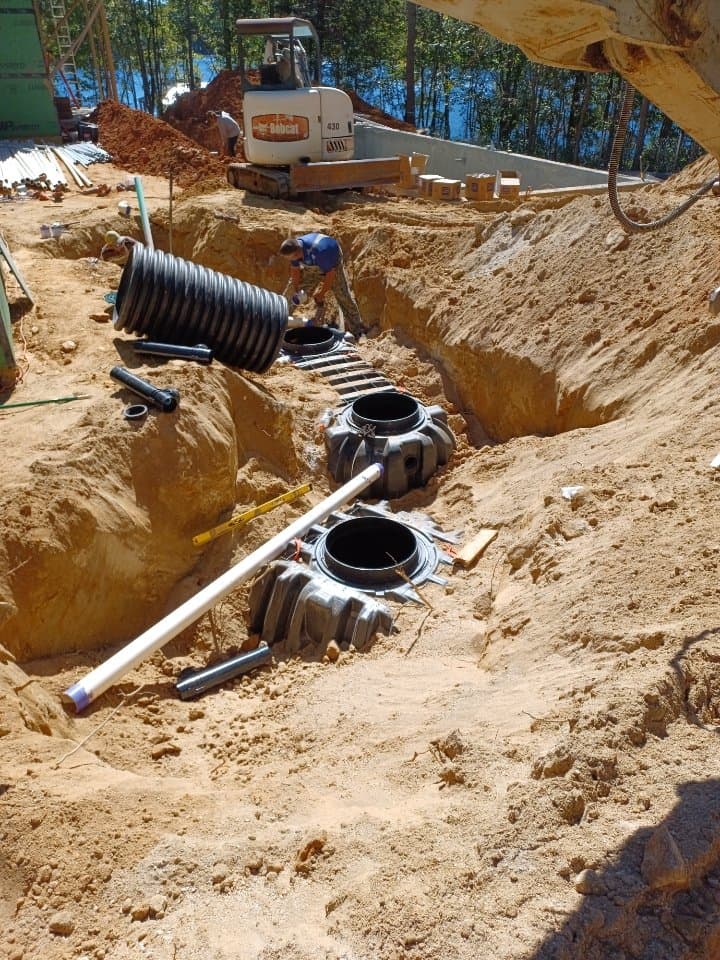
Short answer: An aerobic septic system costs more than a conventional septic system, both to install and to run. It has an aerator, electrical parts, and a treatment chamber that a standard gravity system does not, and it needs more frequent service. It is worth it when a conventional system will not work on your lot, for example because of poor soil, a high water table, a small lot, or nearby water. If a conventional system fits your property, it is almost always the lower-cost choice.
SC-licensed (DHEC #23-368-23066) · 4.9★ on Google · BBB Accredited · Free estimates · 864-660-9644
Last updated: November 2026
What Is an Aerobic Septic System?
A conventional septic system lets wastewater settle in a tank, where bacteria that do not need oxygen break down solids. The liquid then flows by gravity into a drain field, where the soil finishes the treatment.
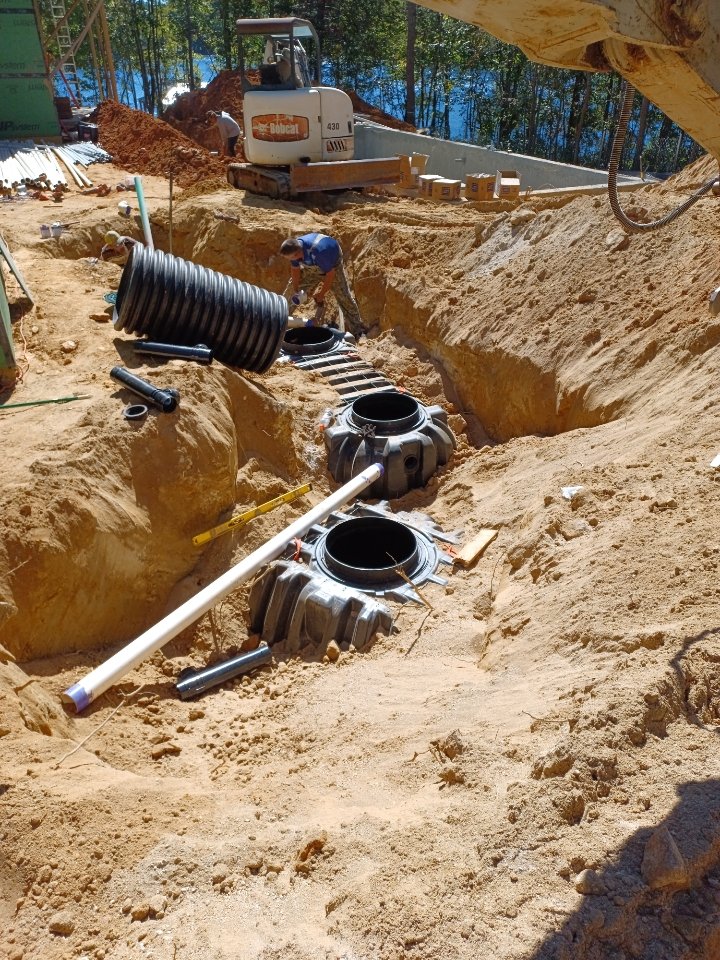
An aerobic treatment unit (ATU) adds air. An aerator pumps oxygen into a treatment chamber so oxygen-loving bacteria can break waste down faster and more completely. The water that leaves an aerobic system is cleaner than what leaves a conventional tank, which means it can work on sites where the soil cannot do as much of the cleanup.
Why Does an Aerobic Septic System Cost More?
Compared with a conventional system, an aerobic system costs more for three reasons:
- More equipment. An aerator, control panel, alarm, and often a pump and disinfection step. More parts means a higher up-front cost.
- Electricity. The aerator runs every day, so it adds to your power bill. A conventional gravity system uses none.
- More maintenance. Mechanical parts wear out and need checking. The U.S. EPA says alternative systems with pumps, float switches, or other mechanical components should generally be inspected about once a year, compared with about every three years for a conventional system (EPA: How to Care for Your Septic System).
When Is an Aerobic System Worth It in Greenville County?
Much of the Upstate sits on dense red clay. Clay holds water and drains slowly, which can make it harder for a standard drain field to absorb and treat wastewater. Add sloped lots, rock, creeks, and lakefront property, and some sites simply cannot support a conventional drain field of the size the house needs.
An aerobic system can make sense when:
- The soil drains too slowly or too fast for a standard drain field.
- The lot is small and there is not enough room for a full-size field.
- The water table is high or the property sits close to a lake, stream, or well.
- A conventional system has already failed and the site will not support a replacement of the same type.
In those cases, the extra cost buys you a working system on land that otherwise might not be buildable or livable. If none of those apply, a conventional system is usually the better value.
What Does It Cost to Own an Aerobic System Over Time?
Think beyond the installation. Owning an aerobic system means:
- Regular service visits to check the aerator, alarms, and any pumps
- Pumping the tank, just like a conventional system
- Replacing worn parts such as aerators over the life of the system
- Monthly electricity to run the equipment
Skipping service on an aerobic system tends to cost more than skipping it on a conventional system, because a failed aerator stops the treatment the whole design depends on.
How Do You Know Which System Your Property Needs?
The site decides. Soil, slope, lot size, and distance to water determine what the state will permit. South Carolina regulates septic systems through the Department of Environmental Services, which has homeowner guides on permits and care (SCDES Septic Homeowner Resources).
Swamp Rabbit Septic handles septic system installation for homes across Travelers Rest, Greenville, Greer, Taylors, Easley, Pickens, and the rest of the Upstate. We are licensed by the state of South Carolina (DHEC #23-368-23066) and give a free estimate before any work begins. Already have a system? Our septic tank maintenance service keeps it running.
Frequently Asked Questions
Is an aerobic septic system better than a conventional one?
It treats wastewater more completely, but "better" depends on the site. On a lot with good soil and enough room, a conventional system does the job with fewer parts, no electricity, and less maintenance. Aerobic systems shine on lots where a conventional system will not work.
How often does an aerobic septic system need service?
The EPA recommends that alternative systems with mechanical components generally be inspected about once a year. The tank still needs pumping too, on a schedule based on its size and household use.
What happens if the aerator stops working?
The system loses the oxygen it needs to treat waste properly. Most aerobic systems have an alarm to warn you. If yours goes off, call for service rather than ignoring it. Untreated wastewater can damage the drain field and cause odors.
Can I switch from aerobic to a conventional system?
Only if the site can support a conventional system and it can be permitted. Many aerobic systems were installed because a conventional system was not an option, so switching back is not always possible.
Not sure which system your lot needs? Get a free estimate from Swamp Rabbit Septic or call 864-660-9644. We hop on the problem.